
Heat Supply Using Geo-HEP and a Heat Pump
Geothermal heat
for buildings and industrial processes.
Heat Supply Using Geothermal Energy and a Heat Pump
In heating mode, the Geo-HEP high-performance energy pile can be used as a geothermal heat source for a heat pump.
The HEP utilizes the natural thermal conditions of the surrounding mountains or subsoil.
The absorbed heat is made available to the heat pump, which actively raises the temperature to the level required for the building or the technical process.
How the Geo-HEP High-Performance Energy Pile and Heat Pump Work Together
In heating mode, thermal energy from the surrounding mountains is absorbed through the outer surfaces of the high-performance energy pile.
Inside the HEP, the integrated water mass aids in the absorption and transfer of thermal energy.
A heat transfer circuit then transports the collected heat to the heat pump. The heat pump actively raises the temperature and provides the required useful heat.
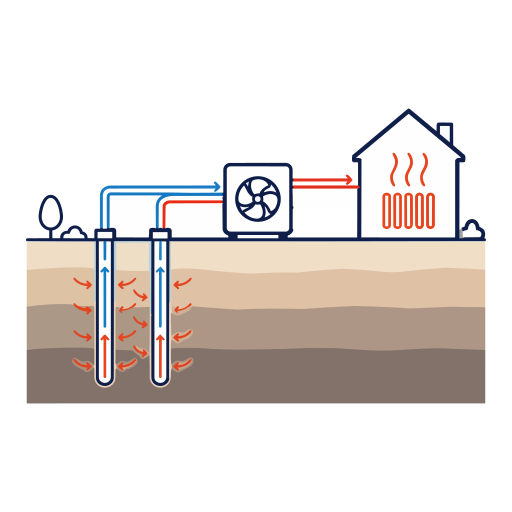
The HEP thus harnesses the thermal energy of the mountains;
the heat pump raises this energy to the required temperature level.
Operating Principles of the Heating System Using the Geo-HEP High-Performance Energy Pile

Relatively constant temperatures in the subsurface
A major advantage of geothermal heat sources is that subsoil temperatures remain relatively constant throughout the year.
This improves the operating conditions for the heat pump compared to heat sources whose temperature levels fluctuate more significantly over the course of the year.
However, how efficiently the entire system actually operates does not depend solely on the heat source. Among other factors, the required temperature level, the load profile, the geology, and the hydraulic integration are decisive.
Cooling and Heating Using the Same Infrastructure
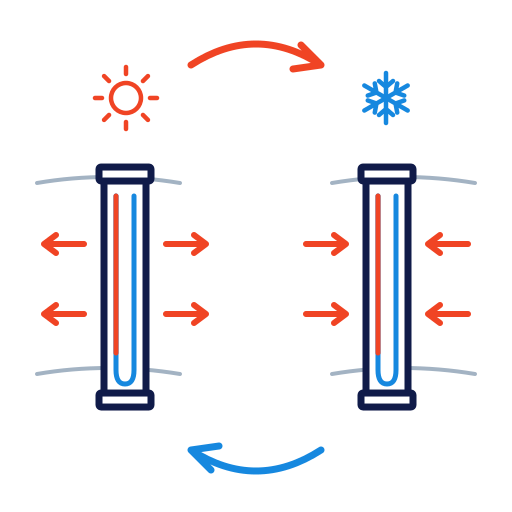
A particular strength lies in the combined use of the same geothermal infrastructure.
During the cooling season, heat is transferred from the building into the geothermal system. In heating mode, the system can in turn supply heat from the ground to a heat pump.
Depending on the system design, this allows the varying demand for heating and cooling throughout the year to be addressed within a single integrated energy concept.
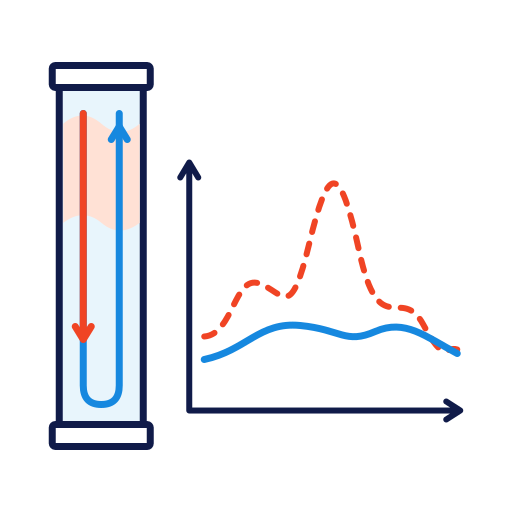
The integrated water mass of the high-performance energy pile serves as a short-term thermal load buffer. It should not be equated with the standalone Geo-HEP seasonal storage system.
The HEP's integrated storage mass as a thermal buffer
Within a high-performance energy pile, approximately 43 m³ of water is preferably available as thermal storage mass.
This storage mass serves primarily to absorb and buffer short-term thermal loads within the system.
It should not be confused with the standalone Geo-HEP seasonal storage system, which is being developed for targeted long-term or seasonal storage.
Seasonal Storage as a Heat Carrier for Heating
In addition to the HEP, the Geo-HEP seasonal storage system can also be used for heating—depending on the system configuration.
However, its operating principle must be clearly distinguished from that of the Geo-HEP high-performance energy pile.
The seasonal storage facility is located in the mountains or underground; however, it does not use the natural ambient temperature of the mountains as an energy source or heat sink.
Instead, the storage field is specifically managed thermally. Thermal energy is introduced from the outside, stored, and later retrieved.
Depending on the system design, part of the seasonal storage field can also be used as a cold storage facility. This allows both heat and cold to be stored and made available at a later time as part of a coordinated energy strategy.
For which buildings and applications is this combination suitable?
The combination of geothermal heat pumps and heat pumps can be evaluated for commercial, administrative, and industrial buildings, among others.
Projects in which cooling energy is regularly required in addition to heating are of particular interest. In this case, the geothermal infrastructure can be used for both purposes throughout the year.
Whether the system is suitable for a specific building depends on the heating and cooling demands, the required temperature levels, the existing building systems, and site conditions.
New Construction and Existing Heating Systems
For new construction, geothermal heating systems, heat pumps, and building services can be planned together from the very beginning.
For existing systems, we assess how the geothermal heat source can be integrated into the existing heating system and what adjustments are necessary.
The technical solution is therefore always tailored to the specific building or process and its system structure.
Proper sizing determines efficiency
Factors taken into account for sizing include, among others:
- required heating capacity
- required flow and system temperatures
- annual load profile
- existing or additional cooling requirements
- System hydraulics and technical interfaces
- Geological and hydrogeological conditions
- Permissible drilling depth and available land area
Based on this data, the Geo-HEP system and the heat pump are considered as a single integrated system.
No Generalized Efficiency Values
The efficiency of a heat pump system cannot be reliably determined based solely on the heat source used.
Project-specific calculations and annual values measured over time are the most meaningful indicators. Therefore, performance, energy consumption, and cost-effectiveness are evaluated individually for each project.
Evaluate Geo-HEP as a Heat Source for Your Project
Whether Geo-HEP, in combination with a heat pump, is suitable for your building or technical process can be assessed based on the heat demand, the required temperatures, the existing technology, and the site conditions.
At the same time, we’ll examine whether a cooling function can be effectively integrated into the overall design.